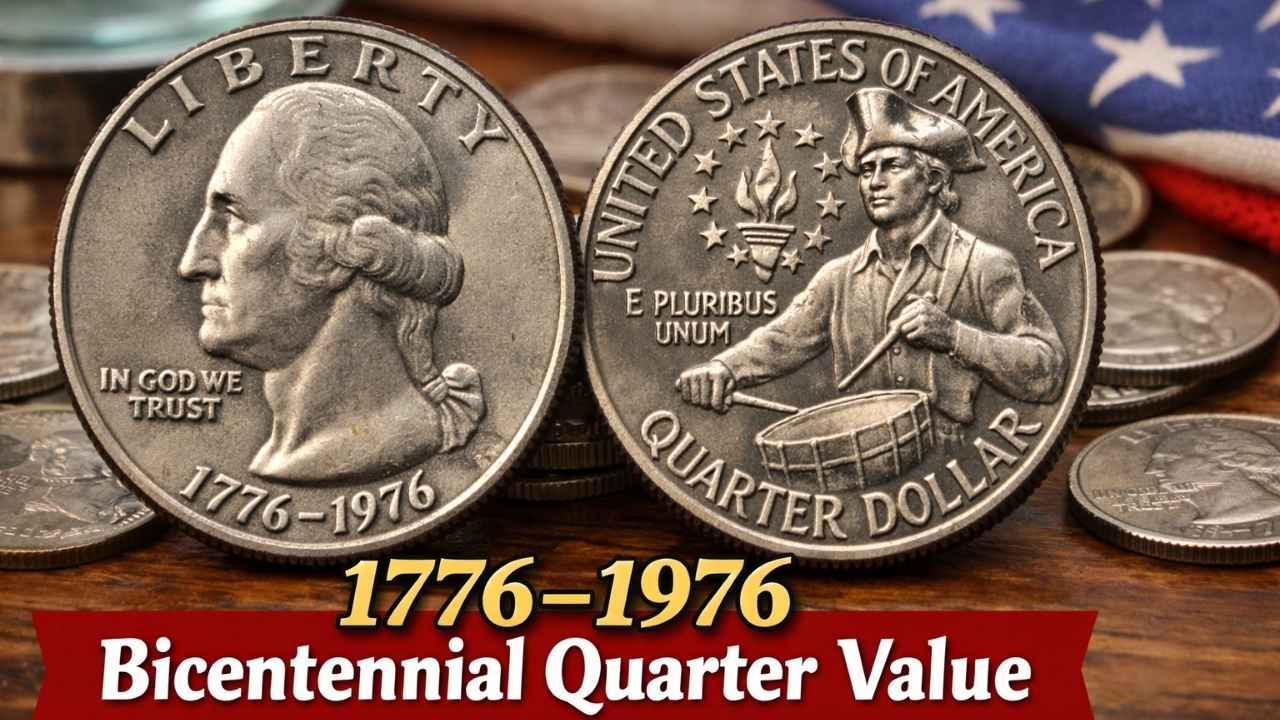
1776–1976 Bicentennial Quarter Value in 2026: In 1976, the United States celebrated its 200th anniversary of independence. To honor this milestone, the U.S. Mint released a special quarter featuring a unique reverse design. Instead of the traditional eagle, the coin displayed a colonial drummer with a torch surrounded by thirteen stars, symbolizing the original colonies. This design was created by Jack L. Ahr and became one of the most recognizable commemorative coins in American history. Millions were struck, making them common in circulation, but certain varieties and conditions have turned some into valuable collector’s items.
Circulation and Popularity
The Bicentennial quarter was minted in both 1975 and 1976, though all bear the dual date 1776–1976. They were produced in massive numbers at the Philadelphia, Denver, and San Francisco mints. Because of their widespread release, most Bicentennial quarters are still found in pocket change today. For many Americans, these coins serve as nostalgic reminders of the nation’s bicentennial celebrations, parades, and patriotic spirit of the mid-1970s.
Silver Varieties
One of the most sought-after versions of the Bicentennial quarter is the 40 percent silver variety. These were struck at the San Francisco Mint and sold in special collector sets. Unlike the standard copper-nickel clad quarters, the silver issues carry a higher intrinsic value due to their precious metal content. In 2026, with silver prices fluctuating, these coins often trade above face value even in circulated condition. Uncirculated or proof silver Bicentennial quarters can command significantly higher prices, especially when graded by professional services.
Rare Errors That Increase Value
Error coins always attract attention from collectors, and the Bicentennial quarter is no exception. Some of the notable errors include double strikes, off-center strikes, and coins struck on the wrong planchet. These mistakes are rare compared to the total mintage, but when discovered, they can fetch hundreds or even thousands of dollars depending on severity and condition. Collectors in 2026 continue to hunt for these elusive pieces, making error Bicentennial quarters a fascinating niche in numismatics.
Condition and Grading
As with all coins, condition plays a crucial role in determining value. Circulated Bicentennial quarters typically hold only sentimental worth, but uncirculated examples, especially those graded Mint State 65 or higher, are far more desirable. Proof coins, with their mirror-like surfaces, are especially prized when preserved in original government packaging. In 2026, collectors often rely on grading services such as PCGS or NGC to authenticate and evaluate their coins, ensuring accurate market pricing.
Market Trends in 2026
The value of Bicentennial quarters in 2026 reflects both historical interest and market demand. Common circulation strikes generally remain worth face value, but pristine examples and silver issues continue to rise in popularity. Online auctions and coin shows reveal steady demand, particularly for high-grade specimens and rare errors. The bicentennial theme resonates strongly with collectors who appreciate the historical significance, making these coins a staple in many collections.
Collecting Strategies
For new collectors, Bicentennial quarters offer an accessible entry point into numismatics. They are easy to find, inexpensive in circulated condition, and rich in history. A popular strategy is to assemble a complete set, including Philadelphia, Denver, and San Francisco issues, along with both clad and silver varieties. More advanced collectors may pursue proof sets or hunt for rare errors. In 2026, building a Bicentennial quarter collection remains a rewarding pursuit, blending affordability with the thrill of discovery.
Historical Significance
Beyond monetary value, the Bicentennial quarter holds cultural importance. It represents a moment when the nation reflected on its origins and celebrated two centuries of independence. The colonial drummer design captures the spirit of revolution and unity, reminding Americans of the sacrifices made during the founding era. For many, owning a Bicentennial quarter is less about profit and more about preserving a tangible piece of history.
Tips for Identifying Silver Issues
Collectors often ask how to distinguish silver Bicentennial quarters from clad versions. The easiest method is to examine the coin’s edge. Silver quarters lack the copper-colored stripe visible on clad coins. Additionally, silver issues were only produced in proof and uncirculated sets from the San Francisco Mint, so coins with an “S” mintmark are the primary candidates. In 2026, these identification tips remain essential for collectors seeking to separate valuable silver pieces from common circulation strikes.

Investment Potential
While most Bicentennial quarters are not rare, certain varieties hold investment potential. High-grade silver proofs, rare errors, and coins with exceptional eye appeal can appreciate over time. However, experts caution that these coins should be collected primarily for enjoyment rather than speculation. The market can fluctuate, and while demand remains strong in 2026, long-term value depends on collector interest and historical significance.
The Role of Nostalgia
Part of the enduring appeal of the Bicentennial quarter lies in nostalgia. Many Americans remember receiving these coins in change during the 1970s or saving them as keepsakes. In 2026, younger generations often inherit collections from parents or grandparents, sparking renewed interest. This emotional connection ensures that Bicentennial quarters remain more than just currency—they are cherished symbols of national pride.
Conclusion
The 1776–1976 Bicentennial quarter continues to captivate collectors in 2026. While most examples remain common and worth face value, silver issues, rare errors, and high-grade specimens hold significant appeal. Their historical importance, unique design, and nostalgic charm make them a cornerstone of American numismatics. Whether collected for investment, history, or sentiment, the Bicentennial quarter stands as a timeless tribute to the nation’s 200th anniversary and a lasting reminder of America’s journey.