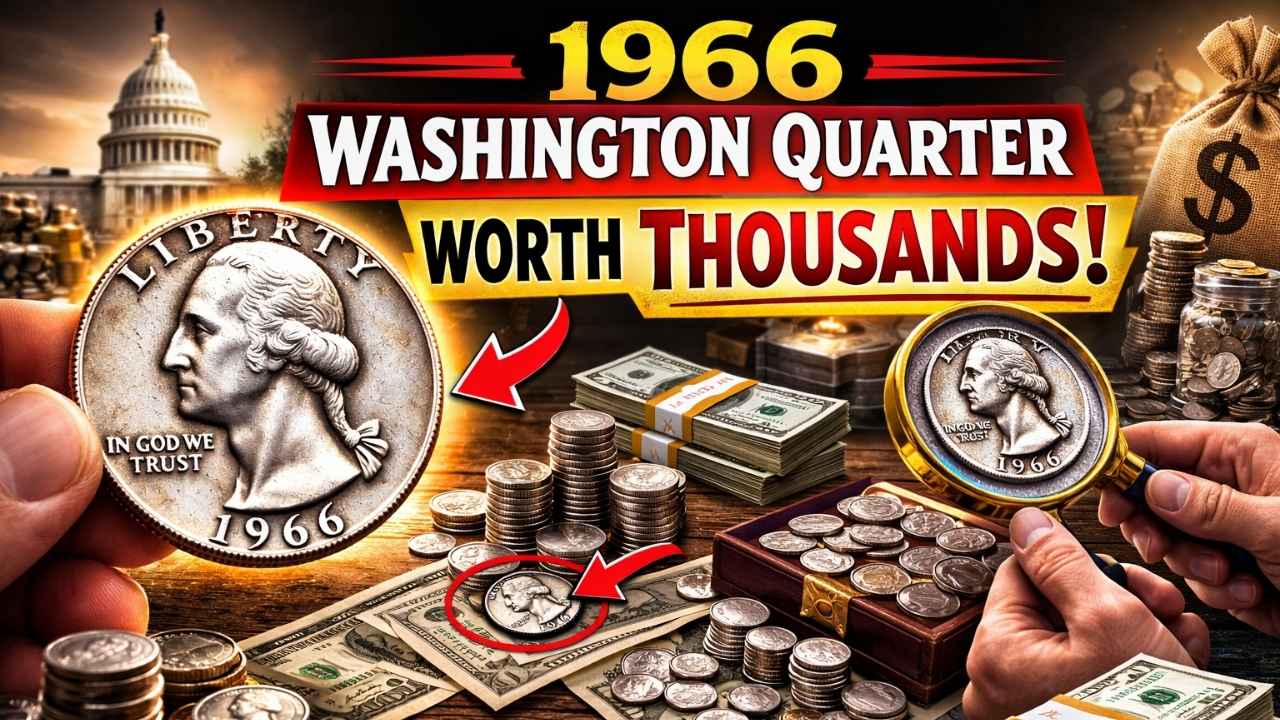
1966 Washington Quarter Worth Thousands: The Washington Quarter has been a staple of American coinage since 1932, originally minted to commemorate the 200th anniversary of George Washington’s birth. By 1966, the coin had already undergone significant changes, most notably the removal of silver from its composition. This shift marked the beginning of the copper-nickel clad era, which makes the 1966 quarter particularly interesting to collectors. While most 1966 quarters are common, certain rare varieties and errors have elevated their value to thousands of dollars in today’s market.
Why the 1966 Quarter Stands Out
The 1966 Washington Quarter is not inherently rare in its standard form. Millions were produced, and most circulated widely. However, what makes this year special are the unique minting anomalies and transitional features that occurred during the shift from silver to clad coinage. Collectors prize these coins because they represent a turning point in U.S. coinage history, and rare varieties can command impressive premiums.

Key Varieties and Errors to Look For
Collectors should be aware of several notable varieties and errors associated with the 1966 quarter:
- Double Die Obverse: Some 1966 quarters show doubling in the lettering or date, making them highly collectible.
- Off-Center Strikes: Coins struck off-center are rare and visually distinctive, often selling for hundreds or even thousands depending on the degree of misalignment.
- Clipped Planchets: A coin missing a portion of its edge due to a minting error can be valuable.
- Transitional Errors: Rare examples exist where coins were mistakenly struck on silver planchets instead of clad, creating a highly desirable rarity.
The Role of Condition and Grading
Condition is critical in determining the value of any coin. The grading scale ranges from Poor (P-1) to Mint State (MS-70). For the 1966 quarter, coins in high mint-state grades or with proof-like qualities are especially prized. A rare error coin in MS-65 or higher can easily reach into the thousands, while circulated examples may only carry modest premiums.

Market Trends in 2026
The coin market in 2026 continues to show strong interest in Washington Quarters, particularly rare varieties from transitional years like 1966. Several factors contribute to this trend:
- Historical Significance: Collectors value coins that represent major changes in U.S. coinage.
- Error Popularity: Error coins have become increasingly popular, with collectors willing to pay high prices for unique examples.
- Auction Records: Rare 1966 quarters have set impressive auction prices, reinforcing their desirability.
- Growing Collector Base: Younger collectors are entering the hobby, often drawn to accessible coins like quarters before expanding into rarer series.
Pocket Finds and Everyday Discoveries
One of the most exciting aspects of coin collecting is the possibility of finding valuable coins in everyday places. While rare 1966 quarters are not commonly found in circulation today, they can still appear in unexpected ways:

- Inherited Collections: Family coin jars or albums may contain overlooked rarities.
- Estate Sales and Flea Markets: Bargain hunters sometimes discover rare quarters among bulk coin lots.
- Bank Rolls: Though less common today, searching rolls of quarters can occasionally yield surprises.
Tips for Identifying Valuable 1966 Quarters
Collectors should carefully examine their coins for signs of rarity:
- Check for Doubling: Look closely at the date and lettering for signs of double die errors.
- Inspect the Strike: Off-center strikes or unusual planchet shapes can indicate valuable errors.
- Weigh the Coin: Transitional errors struck on silver planchets will weigh more than standard clad quarters.
- Evaluate Condition: Coins with sharp details, strong luster, and minimal wear are worth more.
The Future of Collecting 1966 Quarters
As coin collecting continues to evolve, the 1966 Washington Quarter remains a fascinating piece of numismatic history. Its role in the transition from silver to clad coinage ensures lasting interest, while rare varieties and errors provide opportunities for collectors to uncover hidden treasures. In 2026, these coins are not only valued for their monetary worth but also for the stories they tell about a pivotal era in American coinage.