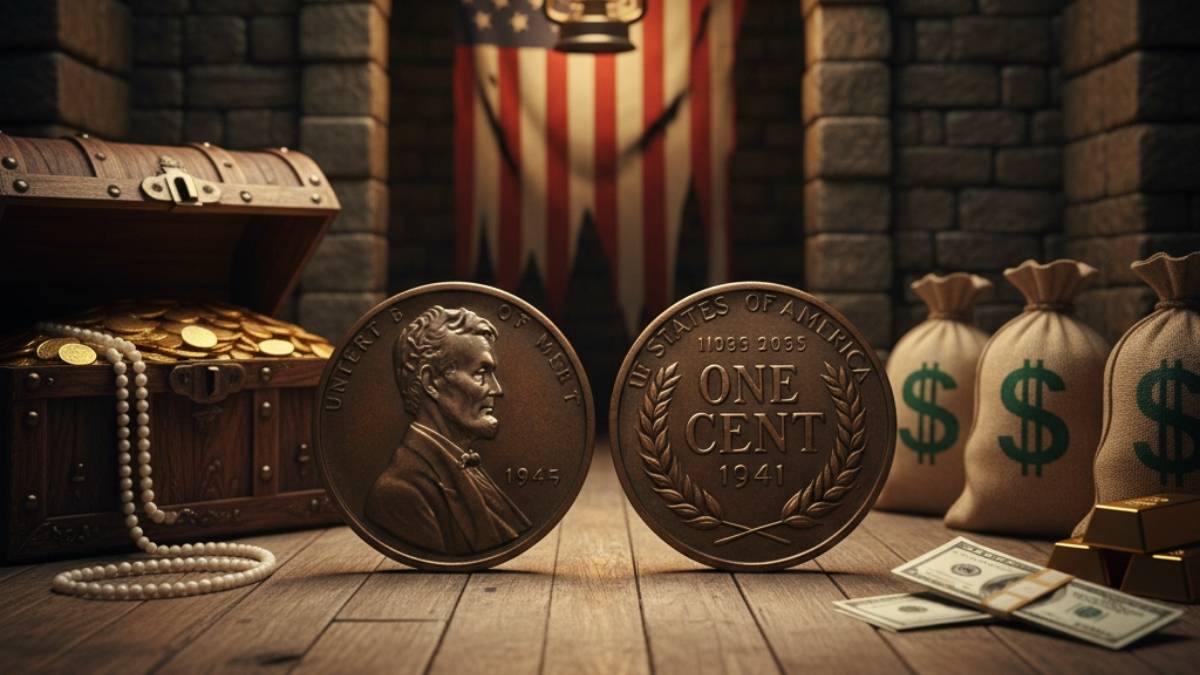
1945 Wheat Penny Value Guide: The 1945 Lincoln Wheat penny was minted during the final year of World War II, making it a coin with historical and cultural significance. Produced in large numbers at the Philadelphia, Denver, and San Francisco mints, most examples are common and worth only a few cents in circulated condition. Yet, certain rare varieties and mint errors from this year have become highly collectible, with values reaching into the thousands.
Why Collectors Value the 1945 Wheat Penny
Collectors prize the 1945 Wheat penny for its connection to wartime America and for the possibility of discovering rare errors. While the majority of these coins are abundant, the thrill lies in identifying unusual varieties that stand out from the rest. The combination of history, rarity, and condition makes the 1945 penny a fascinating addition to any collection.
Rare Error Coins from 1945
Several error varieties of the 1945 Wheat penny are known to exist, and these can command significant premiums:
- Off-Center Strikes: Coins struck off-center, sometimes showing only part of the design.
- Doubled Dies: Pennies with noticeable doubling on the date or lettering.
- Repunched Mint Marks (RPMs): Especially from the Denver and San Francisco mints, where mint marks were hand-punched.
- Clipped Planchets: Coins missing a portion of the metal due to a misfeed during minting.
These errors are rare and can transform an ordinary penny into a valuable collectible.
The Role of Condition and Grading
Condition is critical in determining value. Coins are graded on a scale from Poor (P-1) to Mint State (MS-70). A 1945 Wheat penny in circulated condition may be worth only a few cents, but the same coin in Mint State can be worth several dollars. Error coins in high grades can reach values in the hundreds or even thousands. Professional grading services provide authentication and standardized evaluation, giving collectors confidence in their purchases.
Value Chart for 1945 Wheat Pennies
Here is a simplified chart showing approximate values for 1945 Wheat pennies across different grades and varieties:
| Coin Type | Circulated Value | Mint State Value |
|---|---|---|
| 1945 Philadelphia | $0.05 – $0.20 | $2 – $10 |
| 1945 D (Denver) | $0.05 – $0.25 | $3 – $15 |
| 1945 S (San Francisco) | $0.05 – $0.25 | $3 – $15 |
| 1945 Doubled Die | $25 – $100 | $500 – $2,000 |
| 1945 RPM (D or S) | $10 – $50 | $200 – $1,000 |
| 1945 Off-Center Error | $50 – $200 | $1,000+ |
| 1945 Clipped Planchet | $20 – $75 | $300+ |
Values vary depending on rarity, condition, and market demand, but this chart highlights the potential hidden fortune in 1945 Wheat pennies.
Hidden Treasures in Everyday Change
Although wheat pennies were last minted in 1958, they can still occasionally be found in circulation, coin jars, or inherited collections. Many people overlook them, assuming they are ordinary coins, but sharp-eyed collectors know that certain dates and mint marks can be hidden treasures worth far more than one cent.
Market Trends in 2026
In 2026, wheat pennies continue to attract strong interest. Auction results show steady demand, with rare varieties setting records. Common dates trade close to face value, but rare issues like the 1945 doubled die and RPM varieties remain popular among collectors. The market reflects the enduring appeal of these historic coins.
Tips for Collectors
For those interested in collecting 1945 Wheat pennies, here are some practical tips:
- Learn to identify key error varieties such as doubled dies and RPMs.
- Inspect coins carefully for unusual features.
- Store coins in protective holders to preserve condition.
- Consider professional grading for rare or high-quality examples.
- Follow auction results and dealer listings to stay informed about current values.
The Legacy of the 1945 Wheat Penny
The 1945 Wheat penny is more than just currency. It is a symbol of wartime America, a piece of numismatic history, and a potential treasure for collectors. Whether worth a few cents or thousands, each 1945 penny tells a story that connects generations and preserves the legacy of American coinage.