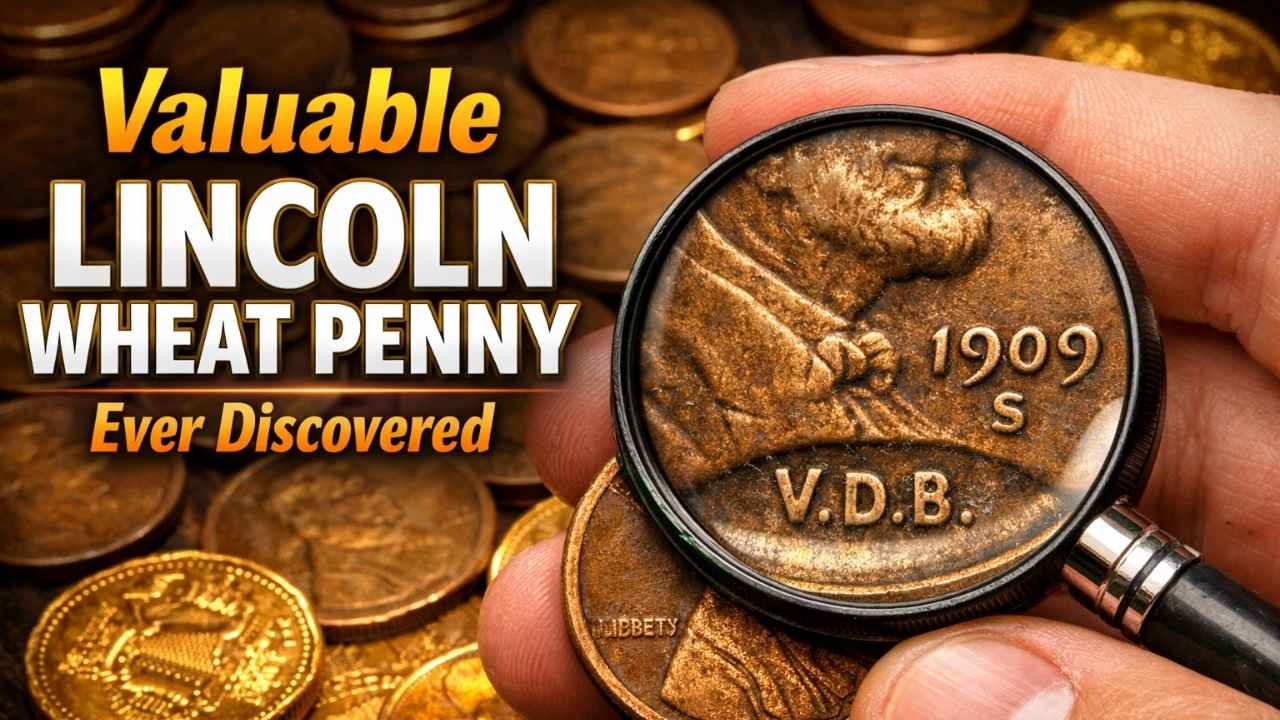
Most Valuable Lincoln Wheat Penny Ever Discovered: The Lincoln Wheat penny was first introduced in 1909 to commemorate the centennial of Abraham Lincoln’s birth. Designed by Victor David Brenner, the coin featured Lincoln’s portrait on the obverse and two wheat stalks framing the words “One Cent” on the reverse. This design remained in use until 1958, when it was replaced by the Lincoln Memorial reverse. The Wheat penny quickly became one of the most beloved coins in American history, and today it is a cornerstone of numismatic collections worldwide.
Why Wheat Pennies Are Valuable
Most Wheat pennies are common and worth only a few cents above face value. However, certain rare dates, mintmarks, and error varieties can command thousands of dollars. Value is determined by rarity, condition, and collector demand. Coins with low mintages or unique errors are especially prized. In 2026, the market for Wheat pennies remains strong, with collectors willing to pay significant premiums for the most desirable examples.
The Famous 1909-S VDB Penny
One of the most celebrated Wheat pennies is the 1909-S VDB. Struck at the San Francisco Mint, it features the initials of designer Victor David Brenner on the reverse. Only a limited number were produced before the initials were removed due to controversy, making this coin extremely rare. High-grade examples can sell for tens of thousands of dollars, and even lower-grade specimens are valuable. The 1909-S VDB is often considered the most iconic Wheat penny ever discovered.
The 1914-D Penny
Another key rarity is the 1914-D Wheat penny, minted in Denver. With a low mintage and high demand, this coin is one of the cornerstones of any serious Lincoln cent collection. Well-preserved examples can fetch thousands of dollars, and in exceptional condition, values can soar even higher. The 1914-D remains one of the most sought-after Wheat pennies in 2026, symbolizing the enduring appeal of rare coinage.
The 1922 No D Penny
The 1922 No D penny is a fascinating error coin. Produced at the Denver Mint, some coins were struck with worn dies that failed to leave the “D” mintmark. As a result, these coins appear to have been minted in Philadelphia, which did not produce cents that year. This error variety is rare and highly prized, with values reaching into the tens of thousands depending on condition. The 1922 No D penny continues to captivate collectors with its unusual story.
The 1931-S Penny
The 1931-S Wheat penny is another rarity, with a low mintage of fewer than one million coins. While not as famous as the 1909-S VDB or 1914-D, it remains highly collectible. High-grade examples are especially valuable, often selling for thousands of dollars. In 2026, the 1931-S penny continues to be a highlight of Wheat penny collections, representing scarcity and historical significance.
The 1943 Copper Penny
Perhaps the most legendary Wheat penny is the 1943 copper cent. During World War II, the U.S. Mint switched to zinc-coated steel planchets to conserve copper for the war effort. However, a small number of pennies were mistakenly struck on leftover copper planchets. These coins are extremely rare and can sell for hundreds of thousands of dollars. The 1943 copper penny is often considered the most valuable Lincoln Wheat penny ever discovered, a true numismatic treasure.
The 1955 Doubled Die Penny
The 1955 doubled die penny is one of the most famous error coins in American history. This variety features dramatic doubling on the obverse lettering, making it instantly recognizable. Collectors prize these coins for their striking appearance, and values can reach thousands of dollars depending on condition. In 2026, the 1955 doubled die remains a favorite among error coin enthusiasts, symbolizing the allure of minting mistakes.
Condition and Grading
Condition plays a critical role in determining the value of Wheat pennies. Coins are graded on a scale from Poor to Mint State, with higher grades commanding higher prices. A rare coin in worn condition may still be valuable, but pristine examples are far more desirable. Professional grading services such as PCGS and NGC provide authentication and standardized grading, ensuring collectors know exactly what they are buying or selling. In 2026, graded coins continue to dominate the high-end market.
Market Trends in 2026
The numismatic market in 2026 shows strong demand for rare Wheat pennies. Online auctions, coin shows, and dealer inventories reveal steady interest, particularly in key dates and famous errors. Prices for common Wheat pennies remain modest, but rare varieties continue to appreciate. The discovery of valuable Wheat pennies in old collections or pocket change highlights the enduring allure of these coins and the possibility of unexpected treasures.
Collecting Strategies
For new collectors, Wheat pennies offer an accessible entry point. They are easy to find, inexpensive in common dates, and rich in history. A popular strategy is to assemble a complete set from 1909 to 1958, including both Philadelphia and branch mint issues. More advanced collectors may pursue key dates, error varieties, or high-grade specimens. In 2026, building a Wheat penny collection remains a rewarding pursuit, blending affordability with the thrill of discovery.
Historical Significance
Beyond monetary value, Wheat pennies hold cultural and historical importance. They represent a period of American history marked by change and growth. The portrait of Abraham Lincoln on the obverse symbolizes leadership and unity, while the wheat stalks on the reverse reflect the nation’s agricultural heritage. For many, owning a Wheat penny is less about profit and more about preserving a tangible piece of history.
The Thrill of the Hunt
Part of the enduring appeal of coin collecting lies in the thrill of the hunt. The idea that a rare Wheat penny worth thousands could be hiding in pocket change keeps collectors searching. Stories of remarkable discoveries inspire newcomers and remind seasoned collectors that treasures can still be found. In 2026, the excitement of finding a rare Wheat penny continues to fuel passion for numismatics.
Conclusion
The most valuable Lincoln Wheat pennies ever discovered highlight the enduring magic of coin collecting. From the 1909-S VDB to the 1943 copper cent, these coins captivate collectors with their rarity and uniqueness. Their historical significance, visual appeal, and market value make them a cornerstone of numismatic collections. Whether collected for investment, history, or sentiment, Wheat pennies remain timeless treasures that connect generations and celebrate the rich heritage of American coinage.