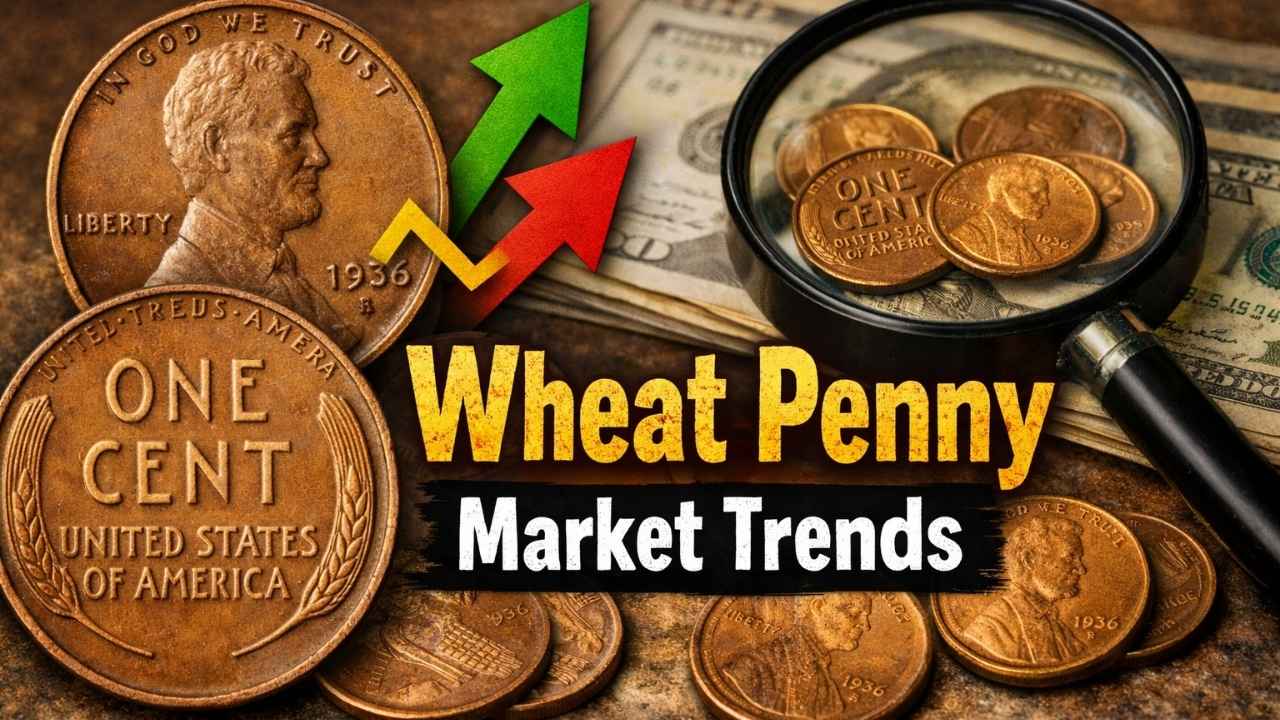
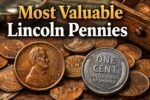
Wheat Penny Market Trends: The Lincoln Wheat penny, minted from 1909 to 1958, remains one of the most beloved coins in American numismatics. Its design, featuring Abraham Lincoln on the obverse and two wheat stalks on the reverse, symbolizes both leadership and agricultural heritage. For collectors, Wheat pennies are more than currency; they are historical artifacts that connect generations. Over the past decade, their market has shown fascinating trends that reveal both stability and growth in value.
Why Wheat Pennies Hold Value
Most Wheat pennies are common and worth only a few cents above face value. However, certain rare dates, mintmarks, and error varieties can command thousands of dollars. Value is determined by rarity, condition, and collector demand. Coins with low mintages or unique errors are especially prized. Over the last ten years, the market has consistently rewarded collectors who focus on key dates and high-grade specimens.
The Rise of Key Dates
Key dates such as the 1909-S VDB, 1914-D, 1922 No D, and 1931-S have shown steady appreciation in value. For example, the 1909-S VDB has long been considered the cornerstone of Wheat penny collections. In 2016, high-grade examples sold for several thousand dollars, and by 2026, prices have risen even higher. The 1914-D and 1922 No D pennies have followed similar trajectories, reflecting strong demand among serious collectors.
The Impact of Error Coins
Error coins add another layer of intrigue to Wheat pennies. The 1955 doubled die penny, with its dramatic doubling on the obverse lettering, remains one of the most famous error coins in American history. Over the past decade, values for high-grade examples have continued to climb. Other errors, such as off-center strikes and repunched mintmarks, have also gained popularity, with collectors willing to pay premiums for unusual varieties.
The Legendary 1943 Copper Penny
Perhaps the most famous Wheat penny is the 1943 copper cent. During World War II, the U.S. Mint switched to zinc-coated steel planchets to conserve copper for the war effort. However, a small number of pennies were mistakenly struck on leftover copper planchets. These coins are extremely rare and can sell for hundreds of thousands of dollars. Over the past ten years, auction records have consistently highlighted the 1943 copper penny as one of the most valuable coins ever discovered.
Condition and Grading Trends
Condition plays a critical role in determining the value of Wheat pennies. Coins are graded on a scale from Poor to Mint State, with higher grades commanding higher prices. Over the past decade, professionally graded coins have dominated the high-end market. Collectors increasingly rely on services such as PCGS and NGC to authenticate and evaluate their coins. This trend has created greater transparency and confidence in the market, driving values higher for top-quality specimens.
Market Growth from 2016 to 2026
Between 2016 and 2026, the Wheat penny market has shown steady growth. Online auctions, coin shows, and dealer inventories reveal consistent demand, particularly for rare varieties and high-grade examples. Prices for common Wheat pennies have remained modest, but rare coins have appreciated significantly. The rise of digital marketplaces has expanded access to coins, allowing collectors worldwide to participate in the market. This globalization has contributed to rising values and increased competition.
Collecting Strategies Over the Decade
For new collectors, Wheat pennies offer an accessible entry point. They are easy to find, inexpensive in common dates, and rich in history. A popular strategy over the past decade has been to assemble a complete set from 1909 to 1958, including both Philadelphia and branch mint issues. More advanced collectors have pursued key dates, error varieties, or high-grade specimens. In 2026, building a Wheat penny collection remains a rewarding pursuit, blending affordability with the thrill of discovery.
Historical Significance and Nostalgia
Beyond monetary value, Wheat pennies hold cultural and historical importance. They represent a period of American history marked by change and growth. The portrait of Abraham Lincoln on the obverse symbolizes leadership and unity, while the wheat stalks on the reverse reflect the nation’s agricultural heritage. For many, owning a Wheat penny is less about profit and more about preserving a tangible piece of history. Nostalgia has played a significant role in sustaining demand over the past decade.
The Role of Inheritance and Discovery
Part of the enduring appeal of Wheat pennies lies in the thrill of discovery. Many collectors inherit coins from parents or grandparents, sparking renewed interest in numismatics. Stories of rare Wheat pennies found in pocket change or old collections continue to inspire newcomers. Over the past ten years, these discoveries have fueled excitement and reminded seasoned collectors that treasures can still be found. In 2026, the possibility of uncovering a valuable Wheat penny remains a powerful motivator.
Investment Potential
While most Wheat pennies are not rare, certain varieties hold investment potential. High-grade silver proofs, rare errors, and coins with exceptional eye appeal can appreciate over time. Over the past decade, investors have increasingly recognized the stability of rare coin markets. However, experts caution that Wheat pennies should be collected primarily for enjoyment rather than speculation. The market can fluctuate, and long-term value depends on collector interest and historical significance.
Conclusion
The Wheat penny market trends from 2016 to 2026 highlight the enduring magic of coin collecting. From the 1909-S VDB to the 1943 copper cent, these coins captivate collectors with their rarity and uniqueness. Their historical significance, visual appeal, and market value make them a cornerstone of numismatic collections. Whether collected for investment, history, or sentiment, Wheat pennies remain timeless treasures that connect generations and celebrate the rich heritage of American coinage.