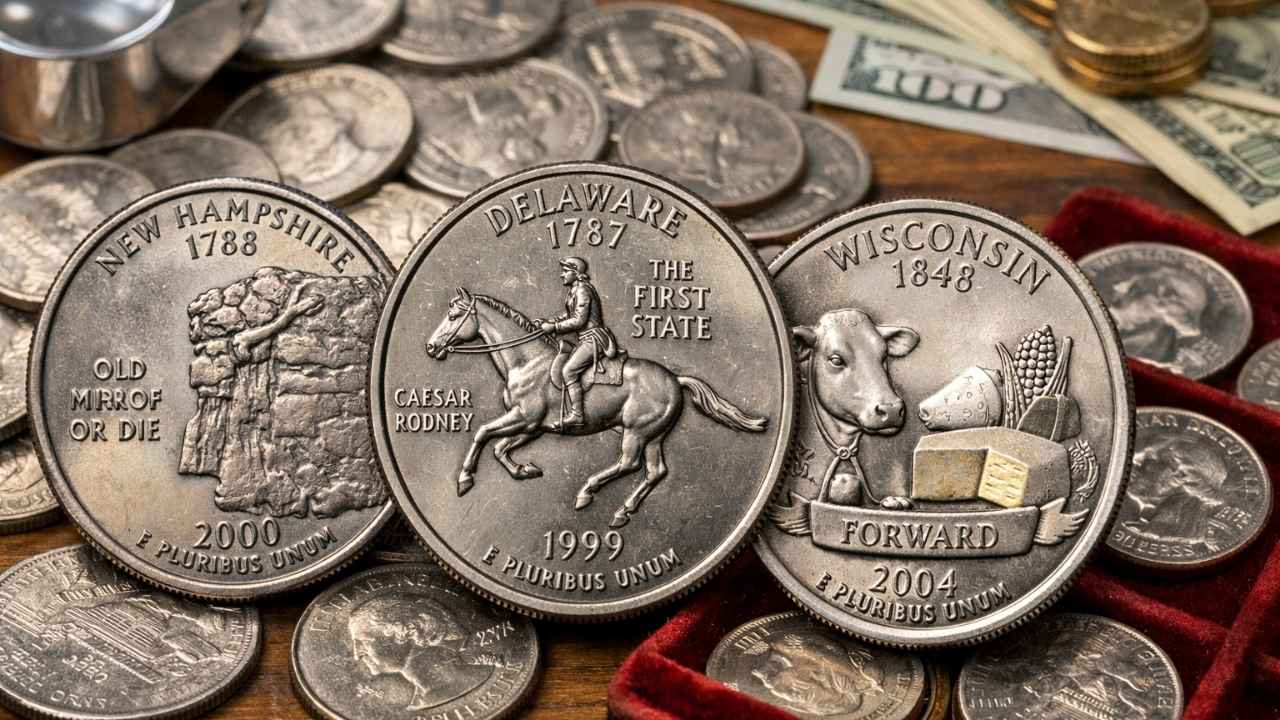
Rare State Quarters Value Guide 2026: The State Quarters program launched in 1999 and ran until 2008, producing fifty unique designs that celebrated each state’s history, culture, and symbols. Millions of Americans collected these coins, making them one of the most popular numismatic programs in U.S. history. While most state quarters are worth only their face value, certain rare varieties, minting errors, and high-grade examples can be worth a fortune. In 2026, collectors continue to seek out these treasures, and understanding their value requires careful study of rarity, condition, and demand.
The Origins of the State Quarters Program
The program was initiated by the U.S. Mint to encourage coin collecting and celebrate the diversity of the nation. Each year, five new designs were released, representing different states. The obverse retained George Washington’s portrait, while the reverse featured state-specific imagery. The program was a massive success, with millions of Americans saving quarters from circulation and purchasing collector sets.
Factors That Influence Value
Several factors determine the value of rare state quarters:
- Mint Errors: Mistakes during production, such as double strikes or off-center designs, can make coins highly valuable.
- Silver Proofs: Special collector editions struck in 90 percent silver carry intrinsic value.
- Condition and Grading: Coins graded MS67 or higher by professional services are worth significantly more.
- Low Mintage: Some quarters had lower production numbers, making them scarcer.
- Collector Demand: Popular states or unique designs often attract higher interest.
Rare State Quarters Worth Collecting
Some state quarters stand out for their rarity and value. Below is a table highlighting notable examples and their approximate values in 2026.
| State Quarter | Notable Variety or Error | Approximate Value (2026) |
|---|---|---|
| 2004 Wisconsin | Extra Leaf (High or Low) | $500 – $5,000 |
| 1999 Delaware | Spitting Horse Die Crack | $50 – $500 |
| 2005 Kansas | “In God We Rust” Error | $100 – $1,000 |
| 2000 South Carolina | Off-Center Strike | $200 – $2,000 |
| 2007 Wyoming | Double Die Reverse | $100 – $1,500 |
| 2008 Hawaii | Proof Silver MS70 | $1,000 – $3,000 |
These values vary depending on condition, certification, and market demand.
The Wisconsin Extra Leaf Quarter
One of the most famous state quarter errors is the 2004 Wisconsin quarter featuring an extra leaf on the corn stalk. Two varieties exist, known as the “High Leaf” and “Low Leaf.” These coins were discovered in circulation and quickly became prized by collectors. Today, certified examples in high grades can fetch thousands of dollars.
The Delaware Spitting Horse Quarter
The 1999 Delaware quarter features Caesar Rodney on horseback. A die crack error created the appearance of the horse “spitting,” leading to its nickname. While not as valuable as the Wisconsin quarter, it remains a popular collectible, with prices ranging from modest sums to several hundred dollars depending on condition.
The Kansas “In God We Rust” Quarter
The 2005 Kansas quarter sometimes appears with the motto “In God We Rust” due to a grease-filled die error. This mistake obscures the letter “T,” creating a humorous and highly collectible variety. Values range widely, with pristine examples commanding significant premiums.
Silver Proof State Quarters
The U.S. Mint released silver proof sets each year during the program. These coins were struck in 90 percent silver and feature mirror-like finishes. In perfect condition, silver proof state quarters can be worth hundreds or even thousands, especially for the final year of the program in 2008.
The Role of Grading in Value
Professional grading services such as PCGS and NGC assign numerical grades to coins based on condition. State quarters graded MS67 or higher are rare and valuable. Proof coins graded PR70 are especially prized, as they represent flawless examples. Certification adds credibility and enhances resale value.
Collector Strategies in 2026
For collectors seeking valuable state quarters, several strategies are effective:
- Search Rolls and Bags: Rare varieties can still be found in circulation or bank rolls.
- Buy Certified Examples: Professional grading ensures authenticity and condition.
- Focus on Errors: Error coins often appreciate faster than standard issues.
- Invest in Silver Proofs: These coins combine numismatic and intrinsic value.
- Stay Informed: Following auction results and market trends helps identify opportunities.
Market Trends and Future Outlook
The market for state quarters remains strong in 2026, driven by nostalgia and rarity. As younger collectors enter the hobby, demand for iconic error coins and silver proofs continues to rise. Prices for high-grade certified examples are expected to remain stable or increase, making them attractive long-term investments.
Conclusion
The State Quarters program captured the imagination of millions and created a lasting legacy in American numismatics. While most quarters are worth only face value, rare varieties, minting errors, and silver proofs can be worth a fortune. In 2026, collectors continue to hunt for treasures like the Wisconsin Extra Leaf quarter, the Kansas “In God We Rust” error, and flawless silver proofs. By understanding rarity, condition, and market trends, collectors can build valuable collections and appreciate the enduring appeal of these modern classics.